
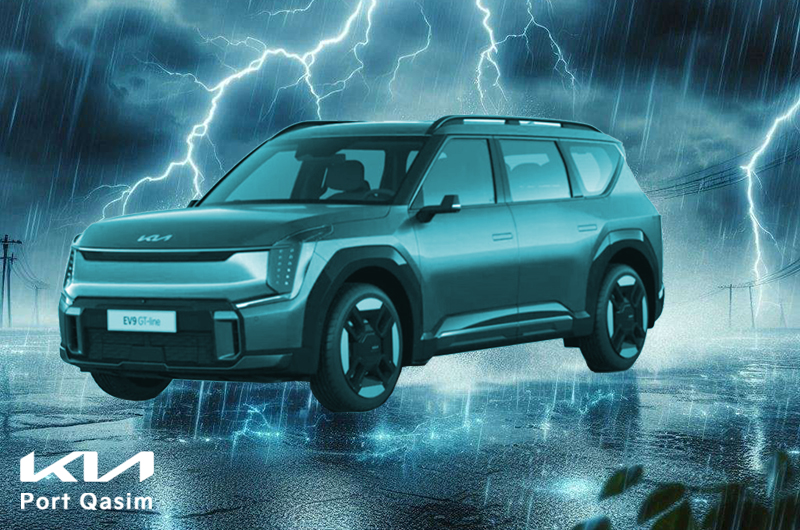
The global shift toward electric mobility has raised important questions about safety and reliability. Many people still wonder if an electric vehicle is safe in the rain, or “What happens if you drive an electric car into water?” Others worry about charging during storms and ask, “Should I unplug my EV during a thunderstorm?” These are valid concerns, and the good news is that modern EVs are engineered with advanced safety technologies to handle such conditions.
If you are exploring futuristic options like the Kia EV5 FWD or hybrid models like the Kia Sportage HEV, understanding EV safety will help you make an informed decision. Let’s explore in detail why an electric vehicle is safe for daily use and long drives in all weather conditions.
Why Electric Vehicles Are Safe
Electric vehicles are not just environmentally friendly; they are also built with higher safety standards compared to conventional fuel cars. Here’s why:
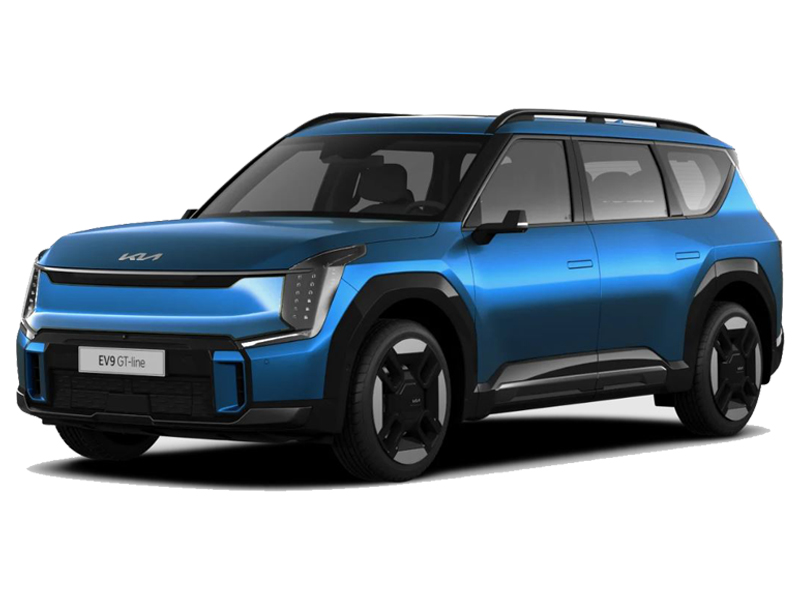
Waterproof Battery Design – EV batteries are sealed in durable protective casings with IP67/IP68 certification, making them safe from rain, splashes, and temporary water exposure.
-
Automatic Power Cut-off – If water intrusion is detected, the system automatically disconnects the high-voltage current to ensure safety.
-
Insulated Charging Systems – Chargers are weatherproof, so charging an electric car in rain or even situations like “Mach E charging in the rain” are completely safe.
-
Eco-Safety Advantage – Unlike traditional engines, EVs produce no exhaust fumes, reducing the risk of environmental hazards like acid rain.
Whether you are considering the versatile Kia Sportage Alpha, the stylish Sportage FWD, or the premium Kia Carnival Executive, safety remains at the heart of every electric and hybrid model.
Electric Cars in Heavy Rain
Driving electric cars in heavy rain is safe, thanks to:
-
Sealed battery packs prevent water entry.
-
Strong undercoating protection, which you can enhance further with undercoating car protection.
-
Durability in wet climates makes them reliable even during long rainy seasons.
Pairing your EV with protective options such as 3M glass coating protection ensures added resilience against acid rain, dust, and moisture damage.
Charging Safety: Rain and Thunderstorms
A very common concern is: “Is it safe to charge an EV in the rain?” The answer is yes. EV chargers are specifically designed to handle wet conditions, meaning they can be safely used outdoors. However, when it comes to charging an electric car in a thunderstorm, it is recommended to unplug the charger during intense lightning as an extra precaution.
So, “Should I unplug my EV during a thunderstorm?” – Yes, not because the EV itself is unsafe, but to protect your home’s electrical system from rare lightning surges.
As for “Can my electric car charger get wet?” – Yes, it can, as it is waterproof, but keeping it dry when possible increases long-term durability.
Price and Models
Kia offers a wide range of options for every lifestyle. From electric to hybrid and fuel-efficient vehicles, you can find full details in the official Kia price list. Models such as the Kia Stonic EX Plus and Kia Sportage L combine modern design, fuel efficiency, and advanced safety—making them perfect choices for families and professionals alike.
Online Convenience for Kia Owners
Kia ensures smooth ownership experiences through online support. You can schedule regular maintenance via the online service appointment form or submit an online inquiry for quick assistance.
Frequently Asked Questions (FAQs)
Q1: Does rain affect EV range?
A: Rain itself doesn’t directly affect range. However, wet roads increase resistance, which can slightly reduce mileage.
Q2: Can electric cars get wet?
A: Yes. EVs are designed to withstand rain, car washes, and splashes without damage.
Q3: Can EVs be charged in the rain?
A: Yes. Chargers are waterproof and completely safe for outdoor use.
Q4: Do electric cars reduce acid rain?
A: Yes. EVs eliminate exhaust emissions, reducing pollutants like sulfur dioxide that cause acid rain.
Q5: Do electric cars use battery acid?
A: No. EVs use lithium-ion batteries, not lead-acid batteries, so they don’t rely on traditional “battery acid.”
Q6: How to protect cars from acid rain?
A: Use protective coatings like 3M glass coating and wash your car regularly.
Q7: What happens if you drive an electric car into water?
A: EVs can safely handle shallow water crossings, but deep flooding should be avoided.
Q8: Is it safe to touch an EV while it’s raining?
A: Yes. EVs are fully insulated, making them safe to handle in wet conditions.
Q9: Should I unplug my EV during a thunderstorm?
A: Yes, as a precautionary measure against lightning surges, although EV systems are protected.
Q10: Are electric cars safer than fuel cars in floods?
A: In many cases, yes. Fuel cars risk stalling when water enters the engine, while EVs have sealed powertrains.
Q11: Can acid rain damage EV paint?
A: Yes, like any car. That’s why coatings and regular cleaning are recommended.
Q12: Do EVs perform well in monsoon regions?
A: Yes. Modern EVs are rigorously tested to operate efficiently in humid and rainy environments.